Public space used to feel anonymous.
People could walk through a street, cross a square, or join a protest without thinking too much about being recorded or identified. Today that experience is changing.
In the United Kingdom there are an estimated 5.2 million CCTV cameras — roughly one camera for every 13 people.
Cameras are present in streets, transport systems, shops, and buildings across cities like London.
Sometimes surveillance is visible. Other times it is simply assumed.
In protests, airports, and city streets, people adjust how they present themselves. Some cover their faces. Others change routes, remain quiet, or stay within the crowd.
It is not always clear when someone is watching. Still, the possibility can shape how people behave.
This research begins with a question:
How can surveillance influence how people behave in public space?
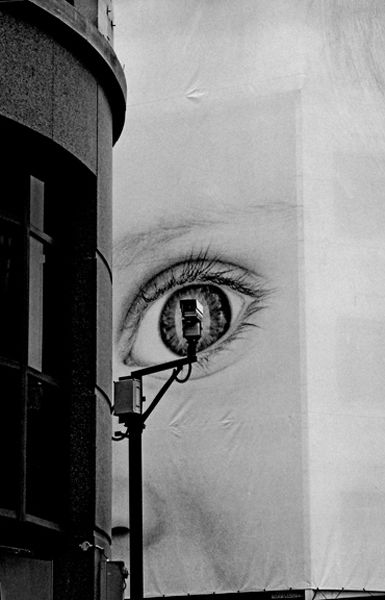
“Reality CCTV” by artist David Dunnico
Leave a Reply